

The Food Packaging Labeling Coursebook
The food packaging coursebook that gets you through your packaging project with confidence: while avoiding the $20,000 mistake I once did with a client project!
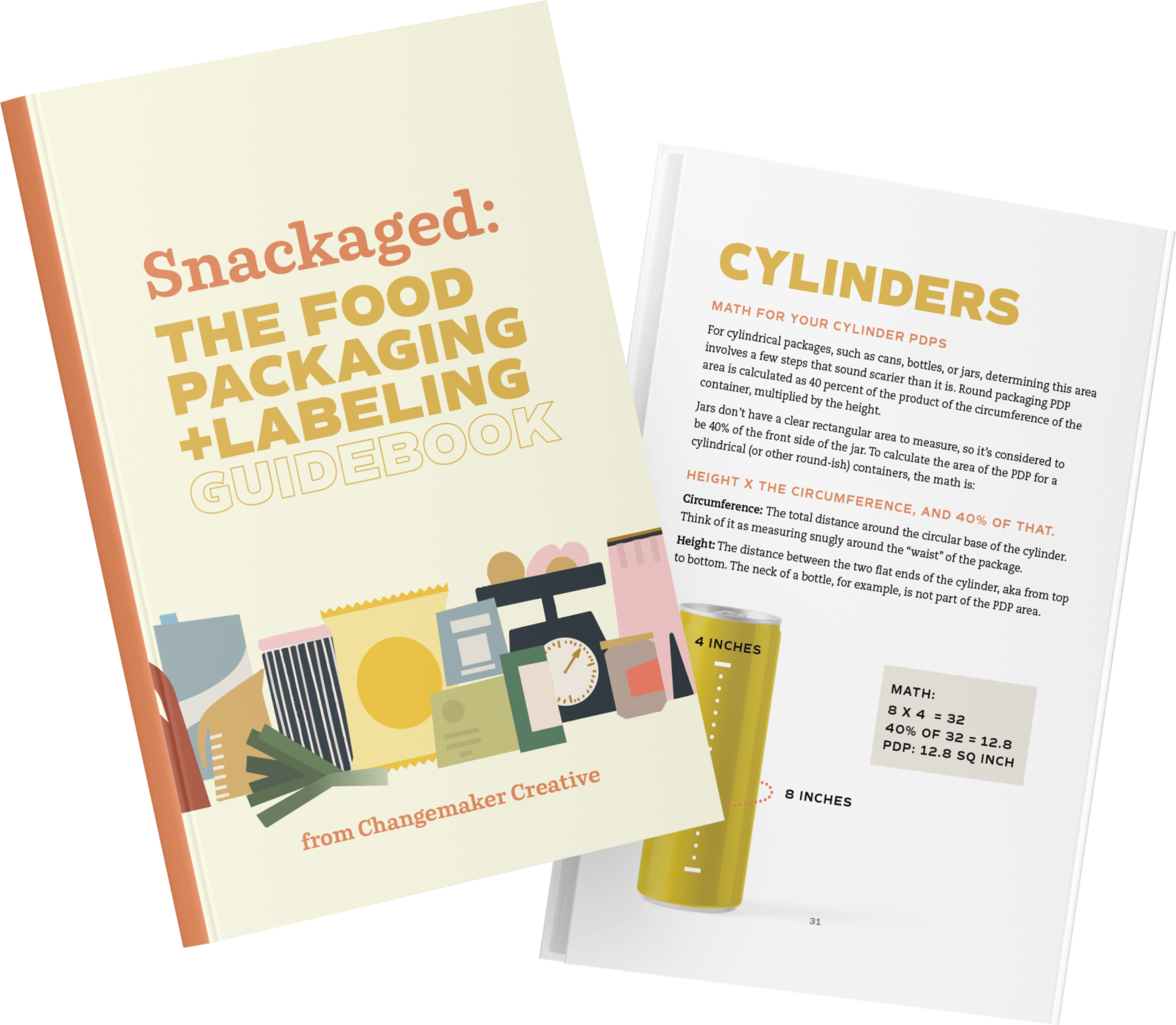
Snackaged

A new way to fast track your food packaging project.
Here’s the thing: you needed to be in the market yesterday. The next best thing? As soon as possible. With this book, you can get there faster. It can be fun again. You don’t necessarily need to spend hours reading legal texts, on endless calls with $500 an hour lawyers, or scrounging through internet forums with dubious advice. You need something to get you up to speed, fast.
Snackaged helps you launch your product to market and avoid legal pitfalls.
Let’s make your product go from “ick” to “yummmmmmmmm”, no design skills necessary.
Why add this book to your reading list?
Become a know-it-all (in no time at all)
You won’t have calm until you know what you need to know. Fast track your way into becoming a packaging smartypants. (And avoid costly mistakes.)
Speedread through the legalese
Time-is-Profit. You don’t have the time to read hundreds of pages of legal jargon. I did all that so you don’t have to. From federal regulations to those pesky things nobody tells you but are best practice… I go through it all.
And there’s pictures!
Checklists to check check it out.
Everyone loves a list – this is a practical tool for you to check things off as you go along, with worksheets to figure shit out, and helpful tools to make stuff with.
Written by a professional packaging designer.
Who was shocked to find that this book doesn’t already exist.
This is the book I wish I had when I started out in food packaging. It is also everything I wish my clients knew before hiring me to design for them. This book started as a collection of resources I was sharing with clients.

Who should read this book?
Meant for food entrepreneurs, but also great for designers wanting to expand into working in food packaging.
The book focuses on easy, digestible tidbits of knowledge. It is not a design book, and it won’t teach you how to be a graphic designer. But it’s packed full of real world examples, stories, and designer tips.
All this with “normal people” language to make it an easy read – ain’t nobody got time for jargon.
“Had we known what we needed to know– would’ve been in market a year sooner. ”
“This is the book I wish I had when I was starting out in food packaging”
“We could have saved so much money and so many headaches if we’d worked with Lilli sooner”
What’s in the book:
CHAPTER ONE:
WHY?
Packaging primes the experience
Packaging matters
Purchases are driven by packaging, consumers won’t try a product where the outsides do not match the quality of the insides
Thanks, Richard Nixon
The mothership of packaging regulations comes from the early 1900s and the 1970s. In the U.S., food packaging has to follow the rules set by a few big players. The FDA (Food and Drug Administration) handles most packaged foods regulations, making sure materials are safe and labels don’t lie. The USDA steps in for meat, poultry, and some egg products. And the FTC (Federal Trade Commission) keeps an eye on any marketing claims that might be a little too creative.
Labeling – way more than stickers
Labeling in FDA parlance means everything – your packaging, your website, your socials, even your reviews, much more broadly than just what’s printed on the package.
CHAPTER TWO:
DESIGN HIERARCHY
Building a readable design, how to highlight important parts and visually “hide” the parts that don’t matter
What human eyeballs see
How much time does a person spend making a decision? What should be front and center and what can be hidden? Creating effective designs takes some planning.
Design trickery
I’m spilling the secrets on how to cram a shit ton of stuff into a label without it feeling chaotic. Organizing information: (design stuff for non designers): best practices for design hierarchy, contrast, readability, professional designer secrets for making things look good and clear for your customers.
Focus groups and how to test
Way less scary than it sounds like, making sure people actually understand what your product IS, and what it tastes like, is a step many skip – to their peril.
CHAPTER THREE
FRONT OF PACK
no shrinkflation here, getting weights and measures right
Font Sizes
There are very specific rules for some sizes of required text, and math formulas for figuring out what size yours should be. I make it simpler!
NET Weights
Different sizes of packaging requires a different net weight statement, and different things need to be said in particular ways. Did you know there’s a real measurement called a dry pint, a bushel, or a peck (whatever the heck a peck is)?
Stylistic Nitpicking
How to format your numbers like a pro – and look all profesh like.
CHAPTER FOUR
INGREDIENTS
The good stuff inside the box
How to organize an ingredient list
Maybe not sexy, but super necessary – quick overview of the correct order you need to list your ingredients in, and at what size.
Certifications
Organic, kosher, GMO… what’s that all about, and what can and can’t you do with these things?
Artificial and natural stuff
Spice blends, oils, natural and artificial flavorings, and how to deal with all that nonsense.
CHAPTER FIVE
CALORIES, SCHMALORIES
getting nutty about nutrition and macros
Counting yer macros
Creating a nutrition panel, plus templates for an FDA-compliant nutrition panel,
Nutrition panels
Which kind of nutritional panel is to be used where (there’s a dozen different kinds!), and how to even start figuring out where to even get a nutrition panel created.
Front-of-the-pack labeling
Prepare thyself for the newest brainchild of the FDA: the front-of-the-pack FOP nutrition info, meant to help us all make good-better-bestest choices.
CHAPTER SIX
SERVINGS
Another helping of regulations, if you please!
Serving Sizes
The “what do you mean the serving size of Oreos isn’t a full sleeve”? Understanding where those serving sizes come from, and how to determine the correct one for your product. Yeah, there’s rules for that too, you can’t just make it up.
Shrinkflation
Why it’s shitty, and why you can’t have lies on your packaging. You can be sneaky, but not lie.
Measurements
Yup, you guessed it! There’s rules for different food items on how you measure a serving. And “about half a pickle” is one of them.
CHAPTER SEVEN
PRETTY PICTURES
“Enlarged for detail”, you don’t say?
Truth in advertising
You do want the product image on the box to accurately present what people are buying, obviously. So if it’s a chocolate brownie with nuts, you’ll want to show a chocolate brownie with nuts. But also, you’ll want it to look as enticing as possible, right?
Flavor images and other suggestions
Nobody expects to find a whole strawberry inside a strawberry yogurt because the container shows one. But what are the rules around that stuff, really?
“Your results may vary”
When what’s shown on the package doesn’t exactly match how it will look like when you make it or bake it.
CHAPTER EIGHT
ALLERGENS
Warning! Achtung!
The big 9 allergens
Did you know that for many, ingredient labels are the only line of protection between enjoying a snack and a medical emergency? On the milder end, a person with an allergy might get a rash or have to rush to the toilet. On the more severe end… well, they’re dead.
Warning, warning!
What warnings and disclaimers on your packaging can mean for lawsuits, recalls, and liability insurance. What is and isn’t required, and how to caveat yourself out of trouble.
Dietary needs and lifestyles
Kosher, halal, keto … there are other reasons than deadly allergies why people choose to eat in a certain way, as part of religious beliefs, or health fad reasons.
CHAPTER NINE
HEALTH CLAIMS
aka how to get in trouble with the feds by saying your product cures cancer
Claims – making good choices
Nutritional claims like “low sodium”, and more outlandish claims like “prevents brain cancer” and everything in between. Learn what is regulated and what’s not, so you won’t get into a shit ton of trouble.
But what if I wanna claim x?
This bit is all about how to make claims without making claims. Truth in advertising and all that. Learning the nifty modifiers of what’s acceptable to say, and how to sell feelings and joy instead of making medical claims
AND THEN WHAT?
Where to get more help and advice? Hiring a lawyer, or consultant, asking Chat GPT… doing your best and hoping for the best… what is the next step in the compliance adventure, and how to find people to help you along, as a compliance Yoda of sorts.
CHAPTER TEN
Where to find you
Small things with big consequences.
Contact info
Whether you want to tell the whole world your company operates from your home kitchen or not – pesky address rules and ways around them.
Country of origin
Made in the USA, or product of Mexico – make sure to get your labeling correct.
“Like and Follow”
How to use your packaging as a call to action for your customers to become lifelong buddies with you.
Chapter Eleven
Barcodes
These BEEPING things!
A whole chapter about barcodes? Really?
Isn’t that a little excessive? Not really, it’s actually much more complex than one would think. Let’s get into it like the nerds we are, shall we?
How a barcode works (and how to mess it up!)
Sizing, spacing, contrast and getting too cute with it – how to make cash register people everywhere hate your guts.
Where to get one?
How and where to get a barcode, how many you’ll need, and what file format will make your designer happy.
CHAPTER TWELVE
SYSTEMS
collection of nitpicky details that didn’t really fit anywhere else.
Batches
Might sound dull, but making sure you know what stuff went into each batch can be the difference between accidentally dosing people with … substances. And not doing that.
How to do labeling like a pro
Creating automated systems for making labels so you can keep your squirrel brain organized.
Why proper SOP’s matter
Sharing some quick notes around how to keep a tidy workspace, if you’re doing your own packaging, and why having a proper SOP is important.

Addendum
RESOURCES
Superheroes to come to your rescue
Legal
Supply chain
Printing
Food science
Etc.
Plus websites and newsletters to follow

You’ve been procrastinating
Because you’d rather gnaw your eyeballs out than:
Read hundreds of pages of legislative memos
Pay hundreds an hour listening to a lawyer you don’t entirely understand
Waste hundreds of hours researching
Agonize over spending thousands of dollars on packaging that might be all wrong
Spend the time you could be doing something fulfilling or fun … doing this.
Focus on things in your work that give more pleasure, that feel more meaningful, and have real change for your business. You’re done endlessly working, working, working until your brain bleeds, doing everything all alone.
The SNACKAGED method:
✅ Get through your compliance learning in one evening – not semesters
✅ Pictures, worksheets, amd bullet points – some of us love to be shown, not told. No jargon or legalese.
✅ Everything you need to know (but didn’t know you needed to know)
Unlike other solutions, here are a few things The Snackaged Method doesn’t include:
❌ Scouring governmental websites for days, slogging through legal texts and jargon
❌ Spending hours on the phone with a lawyer
❌ Making mistakes, and reordering packaging, delaying the project by months AGAIN
❌ Enrolling in college-level courses on packaging design
❌ No overwhelm, no panic.
The Snackaged Method encourages you to take charge and become your own Director of Compliance. You deserve all the good things, without delays, gatekeeping, or confusion.
That’s what Snackaged Food Packaging is all about.
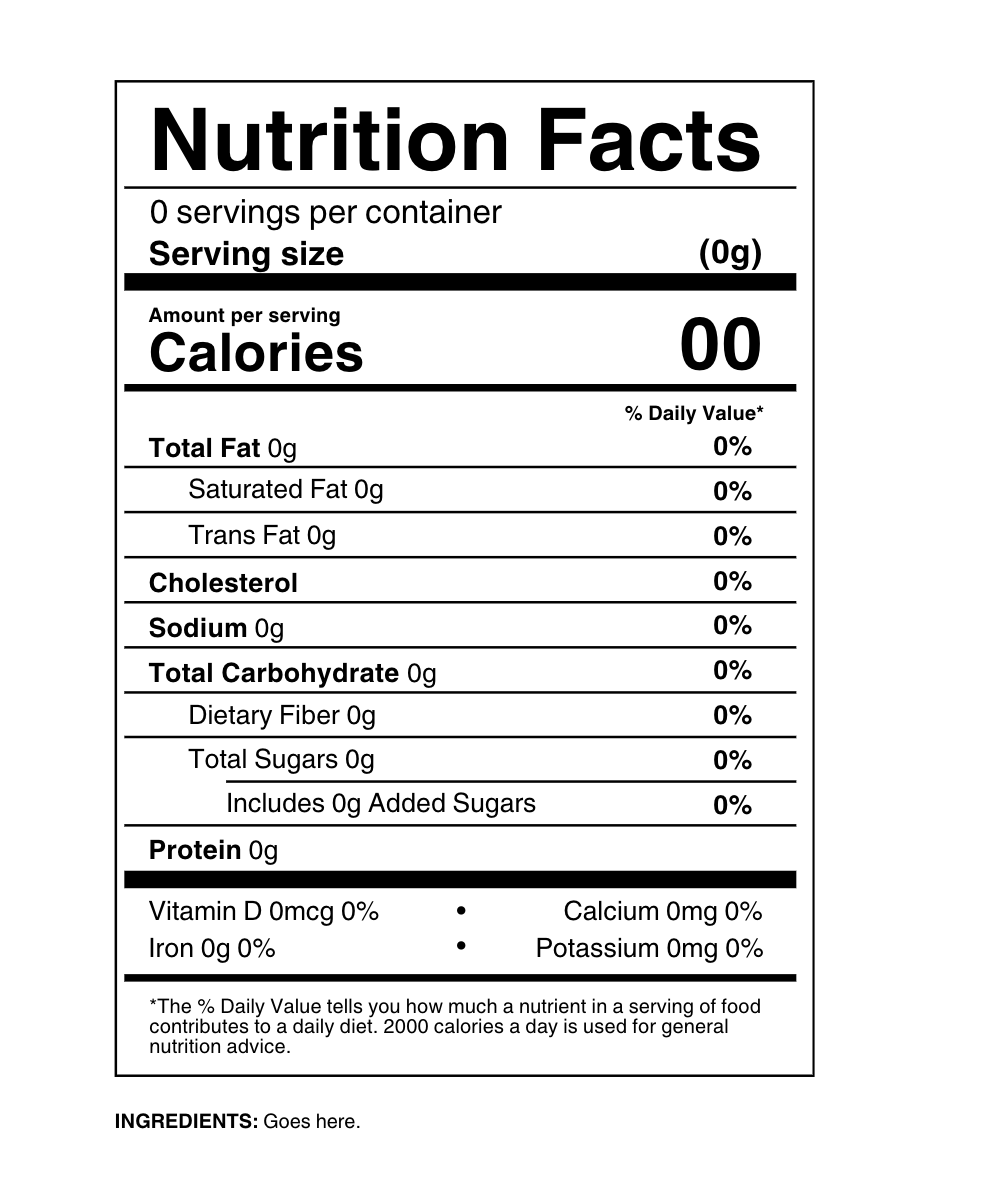
Nutritional panel template you can edit in Canva. Two formats, free editable design template for making your own nutritional panel.
Freebie!
Included in the book:

Taught by an EXPERT
packaging designer
Your instructor. Lilli is the designer and founder of Changemaker Creative, a packaging and branding design studio. She has been working as a designer for decades, and has worked with product based brands of various sizes – from mass market and specialty retail, to the home based starter business.
More than just a packaging designer, I’m here to help you thrive, and have guided clients through all of these hurdles covered in the course. Through a collaborative design process, I help companies attract a cult following of loyal customers.
With a focus on sustainable packaging for conscious consumer product brands, I’m deeply passionate about saving the planet through better design. Clients include award-winning food brands sold at major retailers, and small farmers market neighborhood brands. You can often find me speaking on stages about sustainability, brand strategy, packaging, and design.
I’ve spent my weekends reading hundreds of pages of legal text so you don’t have to.


Not convinced?
Get a free 10-day email course that’s a preview for the book’s content:
Yes, please send me the free email course: